

Hey, It’s Mike.
In today’s issue, I want to show you how I build brand trust.
If you can master it (yes, anyone can) you’ll convert more sales and make more money.
But here's the thing: most business owners are clueless when it comes to creating that all-important social proof.
Even worse, some resort to faking it.
As you're aware, I only share what has proven successful for me. So, I’m going to explain how I've built trust and generated sales for both my current and previous businesses.
It will only take you 7 minutes to watch or read. 👇
The Science of Social Proof
In ‘The Contrepreneur Formula Exposed’, we showed you how gurus can sometimes use fake social proof to convince people to buy their courses.
That’s because social proof is a powerful form of persuasion.
Essentially, as Bobby Cialdini taught us, it’s borrowing third-party influence to sway potential customers.

Social proof greatly influences purchasing decisions, particularly when it comes to your own buying habits. When planning a hotel stay, reviewing feedback from other guests is a common practice.
There are three proven strategies for generating social proof for your business:
Celebrity Endorsements
Reviews
Customer Testimonials
Businesses that understand this concept tend to do really well.
The good news is, you don’t need to fake it, and it doesn’t take much to sway your potential customers to buy.
In a moment I’m going to share some specific strategies that have worked for me.
But before we dive into that, let’s start with a small experiment with Joe Gebbia, Co-Founder of Airbnb.
Understanding Trust
During a talk on Airbnb's success, co-founder Joe Gebbia asked the audience to pass their unlocked phones to the person sitting beside them in the arena.
“That tiny sense of panic you’re feeling right now, is exactly how hosts feel when they open their home.”
If you watch, you’ll hear the nervous energy in the room when he asks people to hand over their phones.
That’s because the more different someone is from us or the less we know about them, the harder it is for us to trust them. It's just how we're built.
It's a social bias that goes way back in our evolutionary history.
Think about it. Would handing your phone to a stranger make you feel nervous?
Would you feel any better if you knew a bit more about the person sitting next to you before you handed it over?
“Imagine they had 150 reviews saying they’re great at holding unlocked phones.”
Maybe you'd feel a little more at ease, right?
That's because when we know more about someone, we trust them a bit more.
There was a study conducted in collaboration with Stanford University that confirmed this very idea.
“The research showed we prefer people like us - the more different somebody is, the less we trust them.”
One particularly interesting finding was how little we need to know about a person for that to change.
”Now if you’ve got less than 3 reviews, nothing changes. But if you’ve got more than 10, everything changes. High reputation beats high similarity.”
I found it interesting that we can be swayed by such a small number of reviews.
In fact, we don’t have hundreds of reviews for our animation business.
Our goal, particularly in the early stages, was to surpass that magical number 10.

To achieve this, we implemented a few key strategies:
Delivering On Our Promises
We made sure to deliver exactly what we had promised to our clients.
Timing Is Everything
We identified the opportune moment to ask for reviews, which, for us, was right after delivering the animation. This ensured that the experience was fresh in their minds, increasing the likelihood of receiving genuine and detailed feedback.
Incentivising with Cash Prizes
Let's be honest, nobody wants to fill out a lengthy review form, even if the service was mint. To motivate our customers, we found that cold hard cash was a fantastic incentive. It was a budget-friendly way to encourage social proof, especially when starting from scratch.
Streamlining the Process
We made it as easy as possible for customers to leave reviews by providing direct links and clear guidance on how to complete them. Removing any unnecessary barriers or complexities encouraged more people to participate.
By explaining to our customers that leaving a review would enter them into a prize draw for a £250 gift voucher once we reached our 20-review milestone, we cleverly incentivised their participation. This approach allowed us to avoid paying for each individual review and only required a payout upon reaching our target.
Remember, it's not just about leaving the reviews on the dedicated platforms. We also repurposed those reviews across our social media channels. By sharing the positive feedback with a wider audience, we amplified the social proof and strengthened our online presence.
Customer Testimonials
Reviews are undoubtedly a powerful tool and the go-to method for building trust in business. However, it's important to acknowledge that people have become increasingly skeptical of reviews due to the abuse and fake feedback we discussed earlier.
So, here's the deal: once you've secured your first 10 reviews and established a foundation of credibility, it's time to up your game.
While reviews are still crucial, consider incorporating additional strategies to complement and reinforce their impact.
When we reached this stage at Learning Heroes, we wanted to showcase our real customer stories in a unique way.
But there was a problem.
All of the testimonial video styles we looked at either bored us to death or looked like some form of a hostage video.
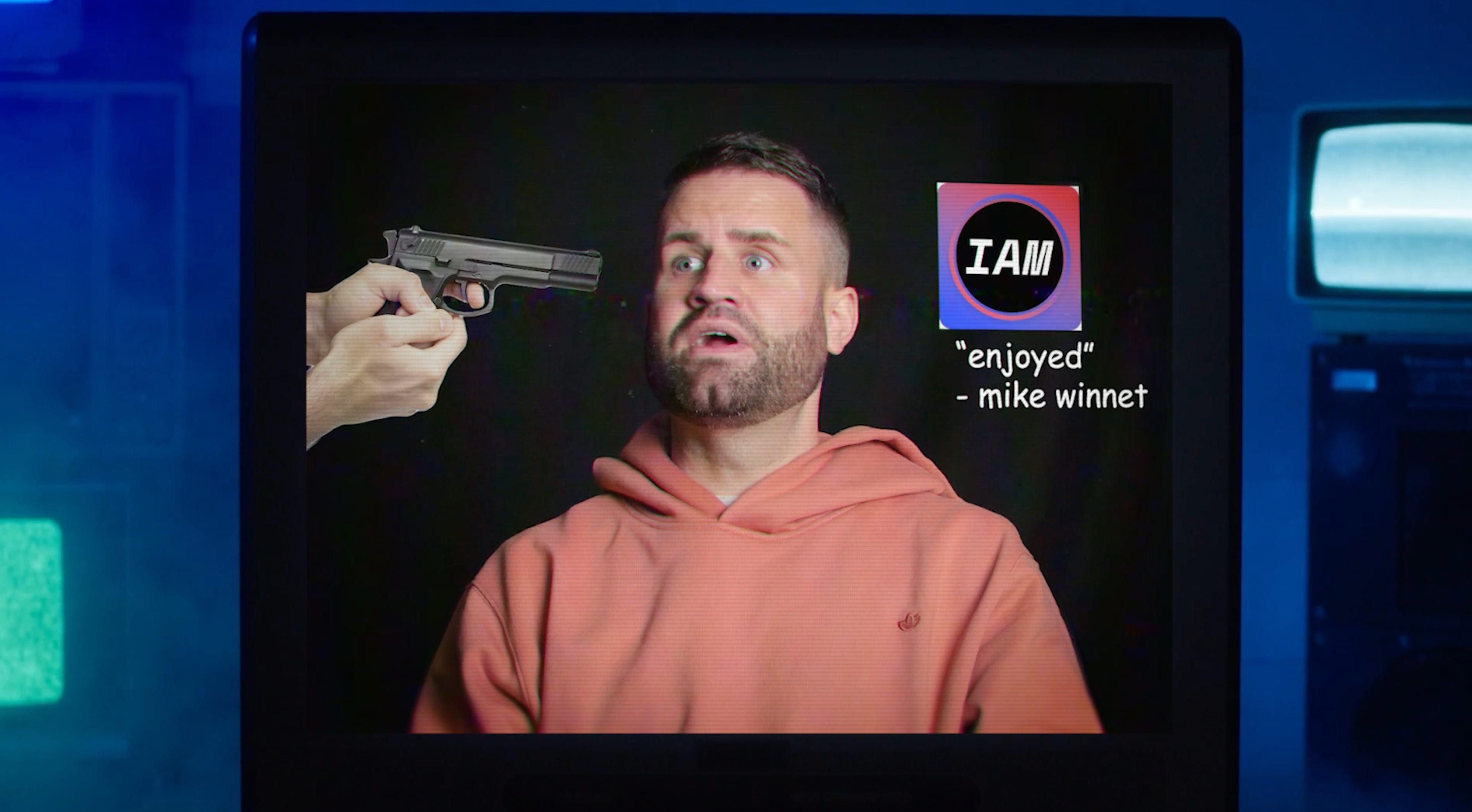
We wanted real customer stories—the kind they naturally shared with us during our phone conversations.
That's when we came up with an idea for a competition.
We sent out emails to our customers, challenging them to demonstrate the best adoption of our training within their workforce. The grand prize? A whole year's free subscription, valued at £10,000! We had some runner-up prizes too.
To enter the competition, all they had to do was send us a short video (usually recorded by the training manager) explaining what they had accomplished and how it had impacted their workforce.
Honestly, we weren't sure if anyone would actually participate. But they did. In fact, the videos that flooded our inbox blew us away.
Among the incredible entries, the team at CarpetRight took home the prize with a mind-blowing documentary-style video. But all the submissions were fantastic.
We suddenly had an instant catalogue of authentic customer stories, and not a single one felt like a sales pitch.
Of course, there are other ways to build social proof.
You can partner with names and organisations your customers are already familiar with.
And you can build safety nets, so consumers feel protected if something goes wrong.
At Learning Heroes, we implemented both of these strategies and continue to do so at IAM.
However, I still think that the customer story videos were the most impactful form of social proof we’ve ever generated.
That’s all for this week.
It's your turn to take action.
If you currently have less than 10 written reviews from real customers, ask yourself why a new customer would trust you over your competition.
To boost your review numbers early on, consider implementing an incentive program that offers a cash reward for leaving reviews.
Once you surpass the 10-review milestone, it's time to up your game. Get creative and produce engaging customer testimonial videos. The competition format worked really well for us, so give it a shot.
If you have any questions or need help, make sure to jump into the conversation over on Slack. If you haven’t joined yet, what are you waiting for?
I’ll be back next week with more ways you can sell more and market better.

